
Beyond Standing Straight: The Hidden Science of "Gravity Intolerance"
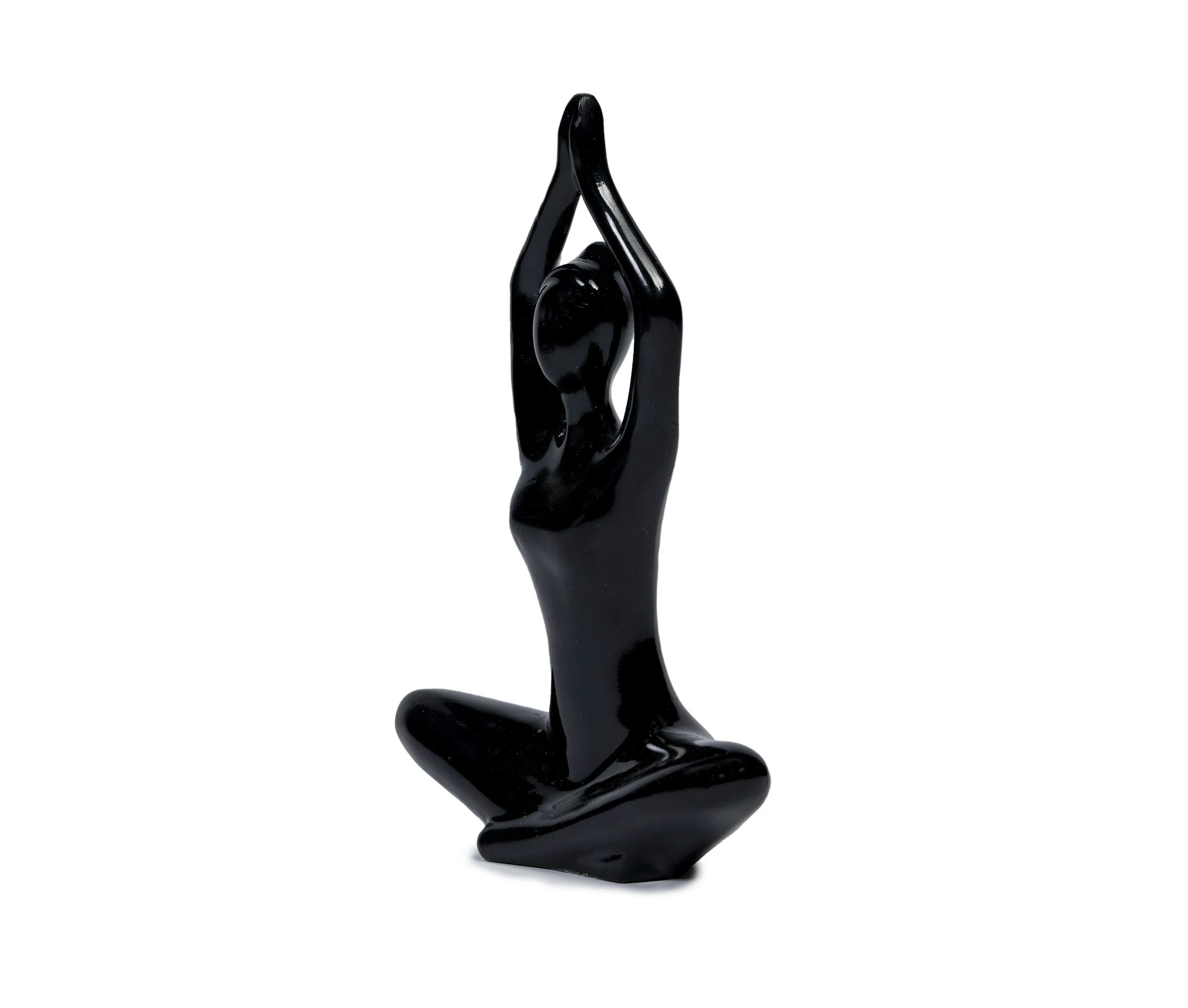
Cultivating intentional posture isn't about rigid, military-style stiffness; it's about actively building the core strength, back awareness and hydration
~ Dr. Brennan Spiegel
by Tara Christine, June 23, 2026
Most of us pay no attention to good posture and treat it like a polite suggestion—an option, something to practice when we catch our reflection or sit in an important meeting. But according to Dr. Brennan Spiegel, a medical professor and gastroenterologist at Cedars-Sinai Medical Center, posture is actually a non-negotiable battle against the most relentless force in the universe: gravity.
When we talk about poor posture, we aren't just talking about a slumped spine. We are looking at a condition Dr. Spiegel calls gravity intolerance—the physical and mental breakdown that happens when our bodies stop successfully fighting the downward crush of planet Earth.
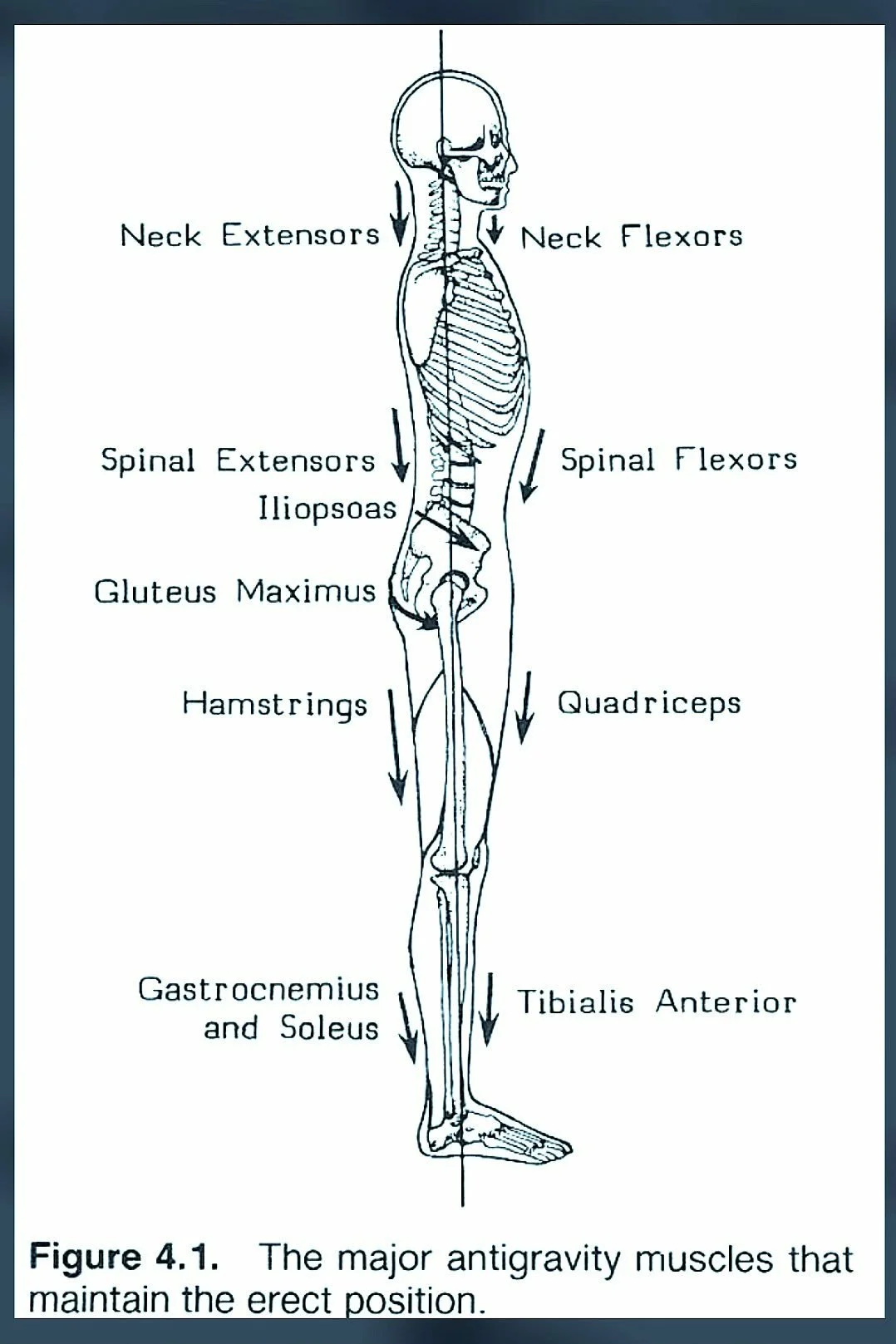
The Antigravity Muscle Network. Source: Chiro.org / CHAPTER 4: BODY ALIGNMENT, POSTURE, AND GAIT
The "Squashed Bread" Effect on Your Gut
When you slouch over your desk or phone, your shoulders roll inward, your diaphragm drops and your abdomen compresses. Dr. Spiegel uses the perfect analogy: your internal organs become like a loaf of bread squashed at the bottom of a heavy grocery bag.
This physical compression literally kinks the "garden hose" of your digestive tract. It slows down digestion, triggers bacterial overgrowth and can be a massive hidden driver behind chronic issues like Irritable Bowel Syndrome (IBS), back pain, chronic fatigue,and even anxiety [10:42]. Remarkably, clinical trials prove that strengthening the body's physical relationship to gravity through core-building exercises like yoga, Tai Chi and strength training is actually one of the most effective ways to treat IBS [11:44].
The Serotonin Connection
It gets wilder: about 95% of your body’s serotonin (the neurotransmitter often labeled the "happy chemical") is produced in your gut, not your brain [23:03]. Serotonin is what chemically primes your muscles and hydraulic systems to stay upright. When your gut is structurally compromised by poor posture, you disrupt this manufacturing plant. Good posture elevates your body, which quite literally helps elevate your mind.
How to Test Your "Gravity Resilience"
Dr. Spiegel shares two quick diagnostic challenges you can try right now to measure how well you're managing gravity:
The One-Leg Balance Test: Can you stand on a single leg for at least 10 seconds without falling? For older adults, research directly links this simple metric of holistic balance and musculoskeletal strength to your literal life expectancy [30:42].
The One-Minute Dead Hang: Grab a secure pull-up bar and hang freely. Taking your body weight off the ground immediately decompresses your spine, making you up to a half-inch taller instantly while building critical evolutionary grip strength [35:08]. Mastering a 60-second hang certifies you as a "gravity master".
The Gravitational Takeaway
Every day, the endless force of gravity is trying to pull us back down to the earth. Cultivating intentional posture isn't about rigid, military-style stiffness; it's about actively building the core strength, back awareness and hydration (Dr. Spiegel recommends roughly half your body weight in ounces of water daily to keep your internal lines flushed [39:47]) to stand tall.
When you sit up, pull your shoulder blades together and open your chest, you aren't just adjusting your appearance—you are letting your internal systems breathe, optimize and thrive.
Daily Moves to Strengthen Specific Anti-Gravity Muscles
To beat gravity and keep your digestive system from compressing, you need to target the ultimate anti-gravity chain: the muscles between your shoulder blades (which pull your chest open), your deep core (the internal corset that lifts your ribs off your hips), along with your glutes and hamstrings (the foundation that keeps your pelvis neutral).
Here is a highly effective, minimal-equipment routine designed to combat "gravity intolerance" and open up the torso.
The Antigravity Movement Routine
1. The Doorway Chest Stretch: 1-2 minutes
Place your forearms on a door frame at a 90-degree angle and gently step forward until you feel a deep stretch across your chest and front shoulders. This instantly reverses the forward roll caused by looking at phones and laptops, giving your diaphragm room to expand. Hold for 30-second intervals while taking deep, abdominal breaths.
2. Prone 'Y-T-W' Raises: 3 sets of 8-10 reps
Lie face down on the floor.
Y: Extend your arms overhead at a 45-degree angle (forming a Y) with thumbs pointing up. Lift your chest and arms slightly off the floor by squeezing your lower shoulder blades.
T: Move your arms straight out to the sides (forming a T) and squeeze your shoulder blades together.
W: Pull your elbows down into your ribs (forming a W), pinching the mid-back muscles hard.
This actively strengthens the precise thoracic muscles required to keep you upright without slouching.
3. Glute Bridges: 3 sets of 12-15 reps
Lie on your back with your knees bent and feet flat on the floor, hip-width apart. Squeeze your glutes and drive through your heels to lift your hips until your body forms a straight line from shoulders to knees. This stabilizes the pelvis, preventing the anterior pelvic tilt that causes the lower back to arch and forces the abdomen to sag forward.
4. The Bird-Dog: 2 sets of 10 reps per side
Start on your hands and knees. Simultaneously extend your right arm straight forward and your left leg straight back until they are parallel to the floor. Hold for 2 seconds, maintaining a perfectly flat back, then return and switch sides. This forces your deep core—the transverse abdominis—to stabilize the torso, creating structural space that prevents gut compression.
5. The Active Dead Hang: 1-2 minutes total duration
Find a secure overhead bar. Grip it firmly and let your body hang, but don't just relax completely; slightly pull your shoulders down and away from your ears to engage your upper back. This provides massive spinal decompression, instantly stretching out a compressed torso and strengthening your evolutionary grip strength. Break this into 20 to 30-second holds.
3 Quick ‘Micro-Habits’ For Your Workday
If you spend long hours sitting at a desk, your body naturally defaults to slumping. Try dropping these frictionless gravity checks into your day:
The 50-Minute Reset: For every 50 minutes you sit, stand up and perform a 10-second single-leg balance check on each side. It forces your neurological system, inner ear and stabilizer muscles to quickly recalibrate against gravity. Throw in some leg lifts on each side while you’re at it!
The Trampoline Mindset: Instead of letting your body mass collapse down into your office chair, actively press your sit-bones down into the seat to lift the crown of your head toward the ceiling. Think of the chair as pushing you up, rather than gravity pulling you down. Keep your core engaged and chin up …
The ‘Scapular Pinch’ Cue: Every time you hop onto a phone call or a virtual meeting, spend the first 30 seconds consciously rolling your shoulders back and pinning your shoulder blades together. This simple physical cue lifts your thorax and instantly keeps the garden hose of your gut un-kinked.
The Moral of the Story is:
You don’t have to fight the planet—you just have to learn how to stand up to it.
Good posture isn't a cosmetic choice or a rigid military rule; it is an active, ongoing partnership with gravity. When we let ourselves slouch and give into the downward pull of the earth, our bodies collapse, our organs compress and our health breaks down from the inside out.
But by building physical strength, staying intentionally aware and treating our bodies as integrated, anti-gravity systems, we can un-kink our health, unlock our energy and live longer, lighter, more buoyant lives.
You were built for this planet. It’s time to stand up and operate properly among it!
If you’ve been feeling exhausted, tired, bloated, anxious, in pain, or just not like yourself, get ready for an explanation you’ve never heard before.
Today, Mel sits down with one of the most respected medical researchers in the world, gastroenterologist Dr. Brennan Spiegel, MD, to uncover the overlooked, invisible force that’s having a shocking impact on your energy, strength, gut health, mood, and every single cell in your body – even how fast your body ages.
Whether you’re dealing with fatigue, back pain, swelling, digestion issues, or a heaviness in your body that you can’t shake, Dr. Spiegel says these are all signs you shouldn’t ignore. Dr. Spiegel is a gastroenterologist and the director of Health Services Research at Cedars-Sinai Medical Center in Los Angeles, one of the leading medical centers in the United States. He is also a professor of medicine and public health at UCLA. He trained at Cedars-Sinai and UCLA, and is a pioneering researcher in the areas of gut health, the usage of AI in medicine, and tools that help patients with pain, anxiety, and chronic illness. He’s the founding editor of the Journal of Medical Extended Reality and he served as Editor-in-Chief of the American Journal of Gastroenterology. Dr. Spiegel has published more than 300 peer-reviewed scientific papers, his research has been cited 30,000 times, and he is the author of Pull: How Gravity Shapes Your Body, Steadies the Mind, and Guides Our Health.
What Dr. Spiegel reveals will challenge the way you think about your body and, more importantly, give you a completely new, practical way to start feeling better immediately. And it may give you the words and the insight you’ve been missing to help your aging parents and other loved ones finally start feeling better, too.
By the end of this episode, you’ll understand:
- Why a “bendy” pinky might be a clue to what’s going on in your gut
-10 foods that boost serotonin production in your body
- The most effective treatment for IBS - and it’s probably not what you’ve tried
- A quick way to notice how the force of gravity is showing up in your body
- How to make yourself taller in just a few minutes
- Why standing on one leg is linked to a longer life
- How a weighted vest can change your posture almost immediately
- A surprising reason roller coasters feel unbearable for some people
- What “gravity management” looks like in real life
- One small habit that can improve how your body handles gravity
Dr. Spiegel says that powerful, invisible force shaping every moment of your life is one you can learn to work with – and he’ll show you how.
This is one of those conversations that will change how you see your body, your health, and what it means to be fully alive on this planet. https://www.brennanspiegelmd.com/
